
Washington Update: Sustainable Energy & Infrastructure — November 2026
October brought significant developments across federal permitting, critical materials, and federal energy financing. Stakeholders began weighing in on the Senate’s Bipartisan American Affordability and Jobs Act, while the Trump administration’s continued actions on offshore wind projects tested the bipartisan permitting proposal. The US Department of Energy (DOE) designated helium as a critical material amid supply disruptions, and the Export-Import Bank of the United States (EXIM) spotlighted Mesabi Metallics’ new iron ore operations. DOE’s Office of Energy Dominance Financing announced more than $14 billion in new loan commitments and closings for nuclear projects, and DOE launched a $237 million funding opportunity to strengthen US supply chains for critical grid components. Finally, House Energy and Commerce Democrats escalated their investigation into DOE’s October 2025 grant terminations, potentially setting the stage for oversight hearings after the November elections.
Stakeholders Mobilize on Permitting Reform
The debate over the Bipartisan American Affordability and Jobs Act of 2026 (BAAJA), which would make major reforms to the federal energy permitting landscape, kicked into gear in October in preparation for Congress’s return after the midterm elections.
Despite the intense buildup to its bipartisan release in the Senate at the end of September, the Trump administration has given only tacit support for the deal as written, while House Republicans have largely refrained from commenting on the legislation. Rather than endorsing the legislation directly, House Energy and Commerce Chair Brett Guthrie (R-Ky.) highlighted the committee’s own permitting agenda; by contrast, House Natural Resources Chair Bruce Westerman (R-Ark.) described the bill as “encouraging.”
The bill has received broad backing from labor and industry groups. Business organizations such as the US Chamber of Commerce, the National Mining Association, and the Steel Manufacturers Association have endorsed the legislation. The American Clean Power Association and the American Petroleum Institute have also voiced support, a rare alliance in the energy sector. Lastly, labor unions, including the Laborers’ International Union of North America (LIUNA) and the United Association, have expressed support.
Opposition has come primarily from environmental organizations, Tribal groups, and state officials. The Natural Resources Defense Council (NRDC) lauded the bill’s transmission provisions but criticized provisions that would change existing environmental laws, reduce Tribal authority, and support fossil fuels. Similar concerns have been raised by the Native American Rights Fund and the National Congress of American Indians. At the state level, the Environmental Council of the States submitted a letter to congressional leaders objecting to several provisions, particularly those affecting the Clean Water Act. Democratic attorneys general from nine states issued a similar letter.
BAAJA has a credible path forward through the Senate, given its bipartisan sponsorship. A procedural vote is scheduled for November 9 which is expected to kick off debate and amendments in the Senate. On the House side, Natural Resources Committee ranking member Jared Huffman (D-CA) has signaled that Democrats will not support the bill as written, highlighting the expected change in the House majority from the upcoming midterms. All sides, however, have a strong motivation to reach consensus during the lame-duck session to avoid the outcome from the previous Congress, which failed to reach agreement on the Barrasso–Machin permitting reform bill.
Trump Moves on Solar and Wind Projects
A key point of contention in the permitting reform bill negotiations has been the Trump administration’s targeting of wind and solar projects. Approximately 300 wind and solar projects have been awaiting Department of Defense review, according to reports surrounding the negotiations. Although the White House has pledged to advance those projects, Pentagon officials reportedly advanced only two on October 22 — one in Maine and one in South Dakota. The projects were not publicly identified, and the reported action did not establish that either had received final clearance or that the remaining projects had advanced.
Separately, the Interior Department has sought court action to reconsider or withdraw federal approvals for four offshore wind developments: Revolution Wind, Atlantic Shores, the proposed 2.2-gigawatt Maryland Offshore Wind project, and New England Wind. These requests place existing approvals under further review but do not, by themselves, constitute completed project cancellations.
Sen. Sheldon Whitehouse (D-R.I.), ranking member of the Senate Environment and Public Works Committee and a participant in the permitting negotiations, has warned that the administration’s actions threaten a bipartisan agreement. He described the Pentagon’s advancement of the two projects as “a start” while calling for additional action on the backlog.
DOE Designates Helium as a “Critical Material”
On October 23, 2026, US Energy Secretary Chris Wright designated helium as a critical material under authority from the Energy Act of 2020. While no specific funding assistance was announced, the announcement unlocks eligibility for federal financing, supply chain monitoring, and grant opportunities for US producers.
Helium’s notable applications include semiconductor chip manufacturing, cooling spaceflight and defense machinery, leak testing in natural gas infrastructure, and medical imaging. The designation comes as supply disruptions continue due to the Iran war. Spot prices for helium have nearly tripled since March 2026, though the full effects of the shortage remain to be seen.
Helium is primarily produced as a byproduct of natural gas processing. The United States is the largest helium producer globally, producing 81 million cubic meters, or around 43.8% of global production, in 2025. Qatar’s supply, the second largest at around 34.6% of global production, has come under threat. The effective closure of the Strait of Hormuz, along with Iranian strikes on Qatar’s Ras Laffan gas facility, has rattled supply chains. The Qatari government said it would take at least three years to get the facility back in operation.
EXIM Chair Touts Mesabi Metallics’ Projects
As part of the Trump administration’s effort to expand US industrial capacity, on September 17, EXIM Chair John Jovanovic toured Mesabi Metallics’ iron ore mine and pellet plant in Nashwauk, Minnesota, as the facility began operations. The project is notable as the first new iron ore mine and pellet plant to commence production in the United States in approximately 50 years and is expected to produce up to 7 million tons of iron ore pellets annually for use in modern steelmaking.
On September 28, Jovanovic also joined President Trump in the Oval Office to announce Mesabi Metallics’ planned $15 billion steel plant in Iowa, which will be supplied by the Minnesota mine. The announcement followed EXIM’s approval of a $770 million direct loan supporting development of the Minnesota operation.
Energy Dominance Financing Announcements
DOE’s Office of Energy Dominance Financing (EDF) on October 5 announced a conditional loan commitment of up to $4.2 billion to finance nuclear uprates and modernization across Vistra’s fleet at Beaver Valley in Pennsylvania and Davis-Besse and Perry in Ohio. DOE said the projects will preserve nearly 4 gigawatts (GW) of baseload power and add 433 megawatts (MW) of new capacity in the PJM region, with an option to finance future uprates at Vistra’s Comanche Peak plant in Texas.
On October 27, EDF followed with a conditional commitment of up to $5 billion to Constellation Energy to finance uprates across eight nuclear plants in Illinois, Maryland, and Pennsylvania, adding nearly 1.1 GW of capacity across the PJM and MISO regions. Like the Vistra commitment, it includes an option to finance additional facilities, and Constellation must satisfy technical, legal, environmental, and financial conditions before definitive financing documents are executed and funds are disbursed.
The next day, EDF announced the financial close of a $5.1 billion loan package to Alliant Energy’s Iowa and Wisconsin utility subsidiaries to support new natural gas-fired power plants, energy storage systems, and upgrades to existing generation. DOE projects the investments will add more than 2.6 GW of new or upgraded capacity and deliver over $1 billion in electricity cost savings. The package, which exceeds the $3 billion conditional commitment offered under the Biden administration in January 2025, marks the administration’s 10th financial close. These announcements build on the September 8 close of a loan of up to $1.9 billion to NextEra Energy to restart Iowa’s Duane Arnold nuclear plant, and they signal that EDF will remain a significant source of capital for nuclear and firm-power projects, including for utilities managing rising load growth
DOE Launches Grid Supply Chain Funding Opportunity
On October 30, DOE announced a $237 million funding opportunity to boost US manufacturing and strengthen supply chains for critical electric grid components. The Grid Supply Chain Alternatives to Lead Energy Dominance (Grid SCALED) funding opportunity will provide up to $50 million for projects that promote refurbishment and reuse of existing grid equipment and materials, and up to $187 million for projects that increase the use of alternative materials and subcomponents sourced and made in the United States. DOE estimates the investment will deliver $125 million in annual utility savings and keep $50 million per year in the US economy that would otherwise go to international suppliers.
Grid SCALED is the first funding opportunity under DOE’s Grid Supply Chain Program, which is authorized to provide up to $375 million for domestic manufacturing of distribution and power transformers, grid components, and materials. DOE anticipates additional announcements in 2027 targeting next-generation technologies, including solid-state transformers. Concept papers are due November 20, 2026, and full applications are due February 8, 2027.
Grant Cancellations
On October 26, House Energy and Commerce ranking members Frank Pallone Jr. (D-N.J.), Kathy Castor (D-Fla.), and Yvette D. Clarke (D-N.Y.) sent a second letter to Energy Secretary Chris Wright. They wrote after DOE missed the October 6 response deadline set in their September 22 letter.
The members accuse DOE officials of misleading Congress by denying that politics drove the October 2025 grant terminations. They cite filings in Thakur v. Trump (N.D. Cal.) in which DOE admitted the decisions were "based solely" on partisan considerations and argued they were permissible "as leverage to end a government shutdown." The members point to the court’s October 27 briefing deadline on DOE’s statutory authority. They state that Congress never authorized partisan grant terminations and pledge continued oversight, which could intensify if Democrats win the House in November.
Looking Ahead
ML Strategies continues to monitor these developments and the broader legislative and regulatory activity shaping the energy and infrastructure landscape. We welcome the opportunity to discuss how these policies may affect your organization, identify emerging funding and market opportunities, and inform potential federal engagement strategies.
Content Publishers
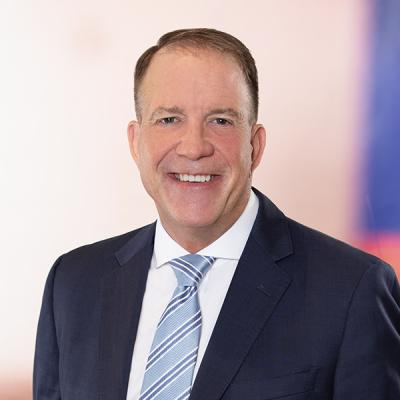
John Lushetsky
Senior Vice President

R. Neal Martin
Senior Director of Government Relations

John McEachern